- Proof Of Intel
- Posts
- USA B*mbed Tehran and Crypto Felt the tremors and Linda Brown Allegedly Ran the Most Expensive Catfish Scheme Ever!
USA B*mbed Tehran and Crypto Felt the tremors and Linda Brown Allegedly Ran the Most Expensive Catfish Scheme Ever!
In this edition Mochi breaks down a landmark DeFi court win, LinkedIn scammers stealing your crypto, Iran and US tensions sending crypto markets into a frenzy, and a romance fraudster so bold she caught the DOJ's attention!

Mochi
March 03, 2026

Hey there, PoI readers! 💫
It's your favorite squishy crypto connoisseur, Mochi, back with another fresh serving of tech and web3 news. Today we've got a landmark legal win for Uniswap, some seriously sneaky ClickFix hackers playing dress-up as VCs, Iran's crypto markets going haywire amid airstrikes, and a romance scammer named "Linda Brown" who's now got the DOJ knocking on their digital door. Buckle up — it's a packed one.
INTEL BRIEF
🟧 Uniswap wins a four-year class action lawsuit after a federal judge ruled the platform isn't liable for scam tokens traded by third parties on its protocol.
🟧 Crypto hackers are using the "ClickFix" technique to impersonate fake VC firms on LinkedIn and hijack browser extensions, tricking victims into executing malware themselves.
🟧 Iran's largest crypto exchange saw a 700% spike in withdrawals within minutes of US-Israeli airstrikes, though a near-total internet blackout quickly shut down further outflows.
🟧 The US Justice Department is seeking to recover $327,829 in USDt linked to a romance fraud scheme targeting a Massachusetts resident, as Tether continues its broader crackdown on illicit crypto activity.
Uniswap Just Won a Four Year Legal Battle and the Judge Basically Said Scammers Gonna Scam

Uniswap Labs and founder Hayden Adams can finally exhale — because a Manhattan federal judge just threw out the class action lawsuit against them, and she didn't pull any punches doing it.
Judge Katherine Polk Failla dismissed the case with prejudice — meaning the plaintiffs can't just come back and try again with a fresh coat of legal paint. The suit, originally filed in April 2022 by a group led by Nessa Risley, accused Uniswap of enabling "rug pulls and pump and dump schemes" on its platform. It also dragged in some pretty big venture names — Paradigm, Andreessen Horowitz, and Union Square Ventures — for good measure.
The class group had already taken one loss back in August 2023, had that loss upheld on appeal, then came back swinging with state-level consumer protection claims. Bold strategy. Didn't work.
Judge Polk Failla made it clear that "merely creating an environment where fraud could exist is not the same as affirmatively assisting in its perpetration." She also dropped a surprisingly relatable analogy — comparing Uniswap to a bank that can't be blamed for money laundering, or WhatsApp not being liable for a drug deal coordinated on its platform. Basically: the platform isn't the criminal.
Hayden Adams celebrated on X, noting this sets an important legal precedent for open source developers — if scammers use your code, they're the ones on the hook. Not you.
A win for DeFi, a rough day for the plaintiffs.
Uniswap wins a four-year class action lawsuit over scam tokens traded on its platform.Federal judge ruled Uniswap cannot be held liable for the actions of unknown third-party scammers.Sets a key legal precedent protecting open source developers from being blamed for how others use their code.Hackers Are Pretending to Be Venture Capitalists on LinkedIn and Stealing Crypto While Doing It
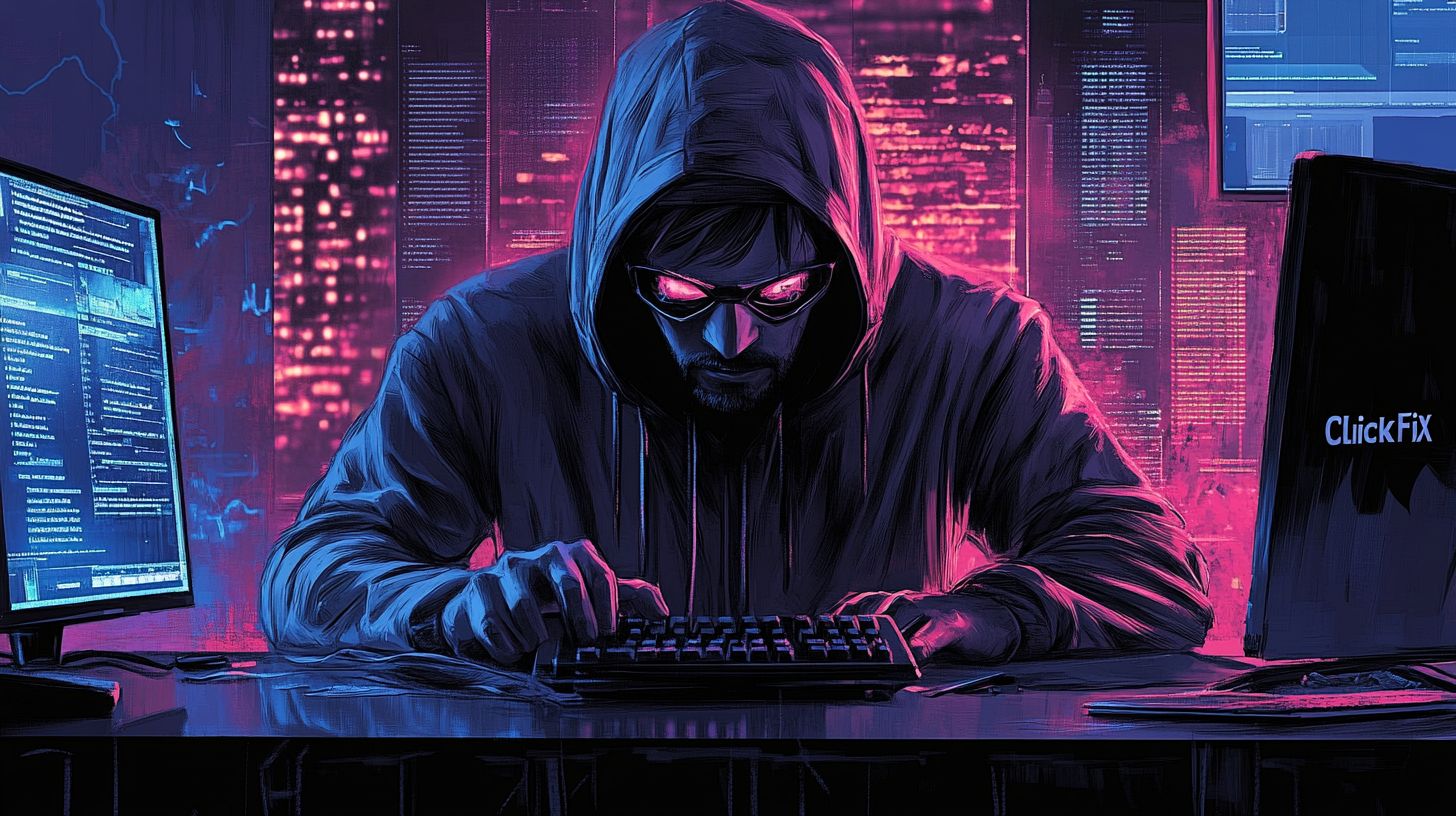
Well, if the firm is called SolidBit, MegaBit, or Lumax Capital — close that tab, because you might be one click away from losing your crypto wallet.
According to a report by cybersecurity firm Moonlock Lab, crypto hackers are impersonating fake VC firms to lure targets via LinkedIn, funneling them toward fraudulent Zoom and Google Meet links. Once there, victims encounter a fake Cloudflare "I'm not a robot" checkbox — clicking it silently copies a malicious command to their clipboard. The user is then prompted to open their terminal and paste a so-called "verification code." Spoiler: it's not a verification code.
What makes ClickFix particularly nasty is that the victim becomes the weapon. No sketchy downloads, no suspicious files — just a person unknowingly executing an attack on themselves. The security industry's defenses? Completely sidestepped.
Moonlock Lab also flagged a person under the name Mykhailo Hureiev, allegedly listed as co-founder of SolidBit Capital, as a believed primary contact in the LinkedIn phase — though the campaign's infrastructure is reportedly designed to rotate identities quickly once exposed.
And if that wasn't enough, hackers also hijacked QuickLens — a legitimate Chrome extension with around 7,000 users — after it changed ownership on February 1st. A malicious update two weeks later began harvesting crypto wallet data, seed phrases, Gmail inboxes, YouTube data, and payment information entered into web forms. The extension has since been removed from the Chrome Web Store.
ClickFix isn't new — Microsoft and Unit42 have been tracking it since at least 2024, with targets spanning manufacturing, retail, government, and energy sectors. Crypto just happens to be the flavor of the month.
Hackers are impersonating fake VC firms on LinkedIn, using ClickFix attacks to trick victims into executing malware themselves via fake verification prompts.The QuickLens Chrome extension was hijacked after a ownership change, stealing crypto wallet data, seed phrases, and personal information from ~7,000 users.ClickFix has been active since 2024 across multiple industries, with Microsoft and Unit42 both issuing prior warnings about its growing reach.Airstrikes Hit Tehran and Iranians Rushed to Pull Their Crypto Out Before the Internet Went Dark

According to blockchain analytics firm Elliptic, crypto outflows from Nobitex — Iran's largest exchange, handling roughly 87% of the country's crypto transaction volume — surged by more than 700% within minutes of US and Israeli airstrikes hitting Tehran on Saturday. Outflows reportedly reached nearly $3 million in a single hour, with Elliptic speculating this "potentially represents capital flight from Iran," with traced funds heading toward foreign crypto exchanges to avoid the scrutiny of the global banking system.
But then — poof. The internet basically vanished. Iran's connectivity reportedly dropped by approximately 99% shortly after the conflict escalated, which fellow crypto forensics platform TRM Labs says is the real reason outflows fell off a cliff after Saturday. TRM pushed back on the capital flight narrative, arguing the country's crypto ecosystem was simply experiencing a "downturn in both transactions and volume" due to the regime's internet blackouts — not a mass exodus of funds.

Crypto outflows on Nobitex from late February to March 1. Source: Elliptic
So which is it? Genuinely unclear, and both Elliptic and TRM appear to be working from the same limited data. Make of that what you will.
What is clear is that Iranians have had plenty of reasons to seek crypto as a financial lifeline. Ayandeh Bank, one of Iran's largest private banks, collapsed in October after racking up $5.1 billion in losses, impacting over 42 million customers. Iran's central bank also warned that eight other banks could face dissolution. And Nobitex itself was hit with an $81 million hack back in June.
Safe to say, it's been a rough year for Iranian finance.
Nobitex saw a 700%+ spike in crypto withdrawals within minutes of US-Israeli airstrikes on Tehran, with nearly $3 million flowing out in one hour.A near-total internet blackout enforced by the Iranian regime quickly halted further outflows, with TRM Labs and Elliptic disagreeing on whether capital flight is truly occurring.Iranians are believed to increasingly rely on crypto amid a collapsing banking system, with one major bank already bankrupt and eight others at risk.A Romance Scammer Named Linda Brown Allegedly Stole $327K in Crypto and Now the DOJ Is Not Amused

Nothing says post-Valentine's reality check quite like a federal forfeiture notice.
The US Justice Department is going after roughly $327,829 in USDt allegedly tied to a romance fraud scheme that targeted an unsuspecting Massachusetts resident starting in 2024. The alleged scammer operated under the name "Linda Brown" — a classic move in the romance scam playbook, where fraudsters build emotional connections online before slowly draining victims' wallets.
According to the US Attorney's Office for Massachusetts, the victim's funds were traced to multiple unhosted cryptocurrency wallets, which were seized back in August 2025. The complaint alleges that all crypto tied to those wallets constitutes property involved in money laundering — meaning "Linda" allegedly wasn't just breaking hearts, but potentially breaking federal law too.
The timing is chef's kiss — this notice dropped roughly three weeks after Valentine's Day, just in case anyone needed a reminder that online love interests asking for crypto are a red flag. The US Attorney's Office for the Northern District of Ohio had already issued a pre-holiday warning urging people not to "send money, gift cards, or cryptocurrency to someone you have not met in person." Solid advice, honestly.
Meanwhile, Tether has been quietly playing cleanup crew on a much larger scale. A spokesperson reportedly told Reuters that the stablecoin issuer has frozen approximately $4.2 billion in USDt connected to suspected criminal activity since 2023 — including a $544 million freeze tied to unlawful betting platforms at the request of Turkish authorities.
Tether did not respond to requests for comment. Busy freezing things, presumably.
The DOJ is seeking to recover $327,829 in USDt allegedly stolen through a romance fraud scheme targeting a Massachusetts resident by someone posing as "Linda Brown."Funds were traced to unhosted crypto wallets seized in August 2025, with all associated crypto alleged to be tied to money laundering.Tether has frozen $4.2 billion in USDt linked to suspected criminal activity since 2023, demonstrating growing cooperation between stablecoin issuers and global authorities.Do you want to be added to the upcoming Proof of Intel Group Chat, where readers get live insights as they happen and more? |
And that's a wrap, my wonderful PoI readers! I hope today's edition kept you informed, entertained, and just a little bit more suspicious of anyone named "Linda Brown" sliding into your DMs.
Remember — stay sharp, stay skeptical, and always verify before you trust in this wild world of web3. Until next time, this is Mochi, signing off with a virtual fist bump!
P.S. Enjoyed today's edition? Share it with a friend who needs their daily dose of crypto chaos — because knowledge is the best asset in your portfolio.
P.S. Don't forget to share your thoughts, questions, and favorite crypto puns with us. very voice matters in the PoI community! 📣❤️ Share the newsletter
🍨📰 Catch you in the next issue! 📰🍨

Intel Drop #340
Disclaimer: The insights we share here at Proof of Intel (PoI) are all about stoking your tech curiosity, not steering your wallet. So, please don't take anything we say as financial advice. For all money matters, consult with a certified professional. -