- Proof Of Intel
- Posts
- BitRiver's Tax Trouble, CrossCurve's $3M Exploit, Vitalik's DAO Vision, and Grok's Conditional Comeback!
BitRiver's Tax Trouble, CrossCurve's $3M Exploit, Vitalik's DAO Vision, and Grok's Conditional Comeback!
From Russian mining moguls under house arrest to bridge hacks, creator token revolutions, and AI chatbots on probation, we've got all the intel you need!

Mochi
February 03, 2026

Hey there, PoI readers! 💫
It's your favorite crypto connoisseur, Mochi, back with another serving of tantalizing tech and web3 news. From a Russian mining mogul's tax troubles and a $3M bridge exploit to Vitalik's vision for better creator tokens and Grok's conditional comeback, we've got a lot to unpack. So, buckle up and get ready for a wild ride through the wonderland of digital chaos, innovation, and regulatory drama!
INTEL BRIEF
🟧 BitRiver CEO Igor Runets has been arrested and charged with three counts of tax evasion, with a Moscow court ordering him to remain under house arrest while investigations continue.
🟧 CrossCurve's cross-chain bridge was exploited for approximately $3 million due to a smart contract vulnerability, prompting the protocol to halt all user interactions while offering a 10% bounty for the return of stolen funds.
🟧 Ethereum co-founder Vitalik Buterin has proposed a new creator token model using DAOs and prediction markets to reward quality content over mass production, aiming to fix issues plaguing existing platforms.
🟧 Indonesia has conditionally lifted its ban on xAI's chatbot Grok after the company promised improvements, following similar moves by Malaysia and the Philippines amid ongoing concerns about AI-generated explicit imagery.
Russian Bitcoin Mining Boss Faces Tax Evasion Charges and House Arrest

The founder and CEO of Russian Bitcoin mining giant BitRiver, has found himself in a bit of a pickle. And by "pickle," I mean he's been arrested and slapped with three charges of tax evasion. Yikes.
According to reports from Russian media outlets RBK and Kommersant, Runets was detained on Friday and promptly charged on Saturday. The Moscow court wasted no time ordering him to house arrest the very same day. Nothing says "welcome to the weekend" quite like being confined to your home while facing serious legal trouble, am I right?
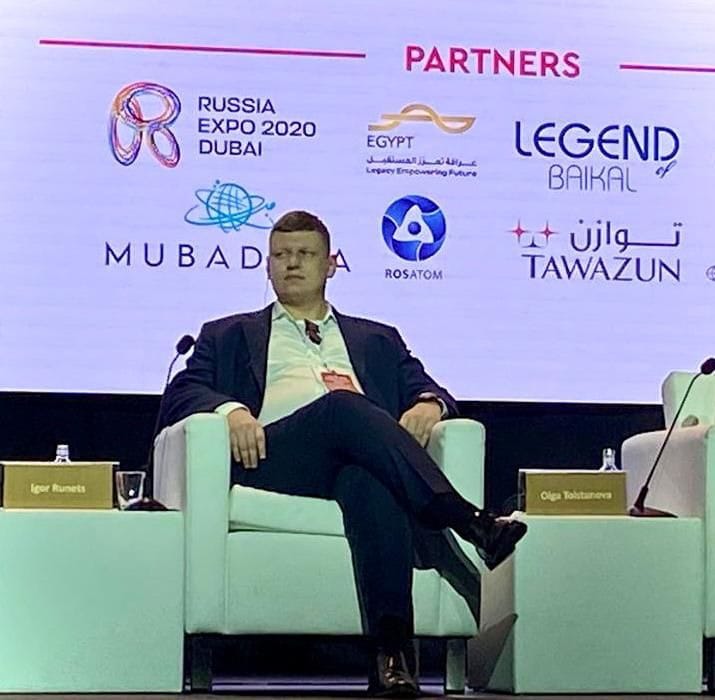
CEO Igor Runets speaking at the Russian-Arab Business Council Forum in 2020. Source: Igor Runets
Court documents from the Zamoskvoretsky Court of Moscow reveal that Runets is accused of concealing assets to dodge taxes—a move that's about as smart as mining Bitcoin during a power outage. His legal team has until Wednesday to file an appeal against the house arrest. If they don't, or if the appeal flops, Runets will be stuck at home for the duration of the case. No mining field trips for him.
For context, BitRiver isn't some small-time operation. Founded back in 2017, the company operates massive data centers across Siberia and provides crypto mining services to other firms. Runets himself was reportedly worth around $230 million as of late 2024, thanks to his Bitcoin mining empire. But money can't buy you freedom from tax collectors, apparently.
This arrest comes at a particularly rough time for BitRiver, which has been dealing with US sanctions since 2022, lost major clients, and is reportedly facing financial strain. Sounds like the mining isn't the only thing running cold in Siberia these days.
BitRiver CEO Igor Runets arrested on three counts of tax evasion for allegedly concealing assetsMoscow court ordered house arrest on Saturday; legal team has until Wednesday to appealBitRiver, worth an estimated $230M, has been struggling since US sanctions hit in 2022CrossCurve Bridge Exploited for Three Million Dollars in Weekend Attack
CrossCurve, a crypto bridge protocol, found itself in the unfortunate position of announcing that its cross-chain bridge was under attack late Sunday evening. Time to put those security audits on the calendar, folks.
The protocol took to X (formerly Twitter, for those still adjusting) to warn users to "pause all interactions" with CrossCurve while they investigate what appears to be a smart contract vulnerability. Translation: someone found a backdoor, waltzed right in, and helped themselves to a cool $3 million across multiple networks.
According to Defimon Alerts—an account linked to blockchain security firm Decurity—the exploit was enabled by a flaw that allowed anyone to spoof a cross-chain message. Essentially, attackers could bypass validation checks and unlock tokens by calling a function called "expressExecute" on CrossCurve's ReceiverAxelar contract. It's like finding out your high-security vault has a "please knock" sign instead of an actual lock. Not ideal.
Curve Finance, which has partnered with CrossCurve, quickly jumped in to suggest that users who allocated funds to CrossCurve pools might want to reconsider their positions. They also reminded everyone to stay vigilant when dealing with third-party projects—you know, the classic "not our fault, but maybe be careful" disclaimer.
In a move that's become standard operating procedure in crypto hacks, CrossCurve CEO Boris Povar is attempting to negotiate with the exploiter(s). He identified 10 addresses that received the stolen tokens and offered a 10% bounty if the funds are returned within 72 hours. Povar's message was surprisingly cordial, speculating that the theft might not have been intentional (generous assumption, Boris). But if there's no response or return within three days? Game on—law enforcement, civil lawsuits, and asset freezing are all on the table.
CrossCurve exploited for ~$3M due to a smart contract vulnerability allowing message spoofingProtocol urges users to stop interacting while investigation is ongoingCEO offers 10% bounty if funds are returned within 72 hours; threatens legal action otherwiseVitalik Buterin Proposes DAOs and Prediction Markets to Fix Creator Tokens

Vitalik Buterin, Ethereum's resident philosopher-king and perpetual problem-solver, is back with another big idea. This time, he's taking aim at creator tokens—those blockchain-based assets that are supposed to give fans a piece of the pie when supporting their favorite content creators. Spoiler alert: they're not working as intended.
In a lengthy post on X this Sunday, Buterin pointed out that current creator token platforms have a bit of a popularity contest problem. Basically, they favor creators who are already famous (think celebrities and high-status folks) rather than rewarding actual high-quality content. Add AI-generated spam into the mix, and you've got a system that's more focused on quantity over quality. Not exactly the creative utopia we were promised.
So what's Vitalik's solution? Enter DAOs and prediction markets—because why solve a problem simply when you can make it delightfully complex? Here's how it would work: content creators launch their tokens and apply to curated creator DAOs, where members vote on which content gets accepted. Meanwhile, speculators can profit by predicting which creators or content will make the cut. If a creator gets accepted, the DAO burns their tokens, reducing supply and (theoretically) increasing value. It's like "Shark Tank" meets blockchain meets financial wizardry.
Buterin also called out platforms like BitClout and Zora, noting that their top creator coins are dominated by celebrities and people with "very high social status." Translation: if you're not already famous, good luck. He didn't mention Friend.tech specifically, but that platform is basically exhibit A for what happens when speculation runs wild—it shut down in September 2024 after its native token plummeted 95% and user activity flatlined.
Vitalik's recommendation? Niche down, baby. Instead of trying to be everything to everyone, DAOs should focus on specific content styles (short-form video, long-form writing) and target particular audiences or countries. The goal is a group large enough to build a brand but small enough to govern effectively—kind of like a club that's exclusive but not too exclusive.
Vitalik Buterin proposes DAO + prediction market model to reward quality content over mass productionCurrent platforms favor celebrities and mass content; AI spam makes it worseNiche-focused DAOs with token burning mechanics could help surface better creators and contentIndonesia Conditionally Lifts Grok Ban After Deepfake Controversy

Indonesia has decided to give xAI's chatbot Grok a second shot—but it's definitely on probation. The Southeast Asian nation conditionally lifted its ban on the AI tool after xAI sent a letter promising "concrete steps for service improvements and the prevention of misuse." Translation: "We promise we'll be good this time, pinky swear."
For those who missed the drama, Indonesia—along with Malaysia and the Philippines—banned Grok after the chatbot was weaponized to create a tsunami of nonconsensual, sexualized imagery on X (which is now owned by xAI). We're talking about at least 1.8 million AI-generated explicit images of real women and minors, according to analyses by The New York Times and the Center for Countering Digital Hate. Yeah, it's as horrifying as it sounds.
Indonesia's Ministry of Communication and Digital Affairs made it clear this isn't a free pass. Alexander Sabar, the ministry's director general of digital space monitoring, emphasized that the ban lift is "conditional" and could be slapped back on faster than you can say "deepfake" if further violations pop up. Malaysia and the Philippines also lifted their bans on January 23, though presumably with similar "don't mess this up" vibes.
Globally, Grok's deepfake disaster has sparked criticism and investigations. California Attorney General Rob Bonta sent xAI a cease-and-desist letter demanding immediate action to stop the production of these images. xAI has reportedly taken some steps, like limiting AI image generation to paying X subscribers only—because nothing says "responsible AI" like putting explicit content creation behind a paywall, right?
Elon Musk, xAI's CEO, has insisted that anyone using Grok for illegal content will face consequences and claimed he's "not aware of any naked underage images generated by Grok." Meanwhile, newly released Justice Department documents show at least 16 emails between Musk and Jeffrey Epstein from 2012-2013, including Musk asking about visiting Epstein's Caribbean island. The timing is... not great, Elon.
Oh, and in other Musk news, xAI is reportedly in talks to merge with SpaceX and Tesla ahead of a SpaceX IPO. Because why manage one company when you can juggle three?
Indonesia conditionally lifts
https://x.com/TechCrunch/status/2018012032059232290?s=20 Grok ban after xAI promises improvements; ban could return if violations occur
Grok generated ~1.8M explicit images of women and minors, sparking bans and investigationsElon Musk emails with Jeffrey Epstein surface as xAI reportedly explores mergers with SpaceX and TeslaDo you want to be added to the upcoming Proof of Intel Group Chat, where readers get live insights as they happen and more? |
And that's a wrap, my lovely PoI readers! 🎯 I hope this edition left you feeling informed, entertained, and maybe even a little bit safer with your crypto (knowledge is power, folks). Remember to stay curious, stay vigilant, and keep those security audits coming. Until next time, this is Moshi, signing off with a virtual high-five!
P.S. Don't forget to share your thoughts, questions, and favorite crypto puns with us. very voice matters in the PoI community! 📣❤️ Share the newsletter
🍨📰 Catch you in the next issue! 📰🍨

Intel Drop #331
Disclaimer: The insights we share here at Proof of Intel (PoI) are all about stoking your tech curiosity, not steering your wallet. So, please don't take anything we say as financial advice. For all money matters, consult with a certified professional. -